
How to Know If Your Child Is Ready for Preschool: A Parent’s Guide
Starting preschool is a big milestone for both children and parents. While some children are excited to enter a classroom and meet new friends, others may feel nervous about being away from home.
One of the most common questions parents ask is: “Is my child ready for preschool?”
The answer is not always based on age alone. Every child develops at a different pace, and readiness can involve several areas, including communication, independence, social interaction, emotional development, and curiosity.
If you are considering preschool for your child, understanding these signs can help you make the transition easier and more comfortable.
What Does Preschool Readiness Actually Mean?
Being ready for preschool does not mean that a child needs to know the entire alphabet, count to 100, or write their name perfectly.
Preschool readiness is more about whether a child is beginning to develop the basic skills needed to participate in a group environment.
A child may be preschool readiness if they are gradually becoming comfortable with simple routines, communicating their needs, interacting with other children, and attempting everyday tasks independently.
The goal is not to have a “perfectly prepared” child before preschool. A good preschool environment should also help children develop these skills.
1. Your Child Is Becoming preschool readiness
One of the first signs of preschool readiness is growing independence.
Your child may start wanting to do simple things without constant assistance, such as:
Eating with minimal help
Putting toys away
Wearing or removing simple clothing
Washing their hands
Carrying their own small bag
Choosing between two activities
Following simple instructions
They may not perform these tasks perfectly, and that’s completely normal.
What matters is that they are willing to try.
Preschool provides many opportunities for children to practise these everyday skills in a supportive environment.
2. Your Child Can Communicate Basic Needs
Children entering preschool don’t need advanced language skills.
However, being able to communicate basic needs can make the transition easier.
For example, your child may be able to tell an adult that they are hungry, thirsty, tired, uncomfortable, or need help.
They may communicate using sentences, short phrases, gestures, or a combination of these.
Teachers can support children as their communication skills continue to develop.
3. Your Child Shows Interest in Other Children
Does your child watch other children playing?
Do they try to join games?
Do they enjoy being around cousins, siblings, or other children?
These can be positive signs.
Preschool introduces children to a social environment where they learn to interact with classmates, share materials, wait for turns, and participate in group activities.
Your child does not need to be highly social before starting preschool. Even showing curiosity about other children can be a good starting point.
4. Your Child Can Follow Simple Instructions
Preschool involves many small routines throughout the day.
Children may be asked to sit with the group, put away their toys, line up, wash their hands, or move from one activity to another.
A child who can generally understand and follow simple instructions may find these routines easier to adjust to.
Parents can practise this at home through simple requests such as:
“Please put the blocks in the box.”
“Bring your shoes.”
“Let’s wash our hands.”
Keep instructions short and positive rather than turning them into tests.
5. Your Child Can Separate From You for Short Periods
Separation can be one of the hardest parts of starting preschool.
Some children happily walk into a classroom, while others cry or hold onto their parents.
This does not automatically mean that a child is not ready.
Separation anxiety is common during early childhood.
Parents can gradually prepare children by allowing them to spend short periods with trusted family members or caregivers.
Talking positively about preschool can also help.
Instead of saying, “Don’t cry when I leave,” try explaining what will happen:
“You’ll play with your friends, meet your teacher, have some fun activities, and I’ll come back to pick you up.”
A predictable routine can make the process easier.
6. Your Child Is Curious About New Things
Curiosity is one of the strongest qualities a child can bring to preschool.
Maybe your child constantly asks “Why?”
Maybe they want to touch everything, explore new objects, make drawings, build things, or listen to stories.
These behaviours show a natural desire to discover the world.
Preschool can provide structured opportunities for children to turn that curiosity into learning.
7. Your Child Is Beginning to Manage Emotions
Preschoolers are still learning how to handle big emotions.
They may become frustrated, angry, excited, or upset very quickly.
That’s normal.
Being preschool readiness for preschool does not mean a child never has tantrums or gets upset.
Instead, look for small signs that your child is beginning to understand emotions and recover with support.
For example, they may accept comfort, use words to express frustration, or become willing to try again after something doesn’t work.
These are important steps in emotional development.
What If My Child Does Not Show All These Signs?
Don’t panic.
There is no single checklist that determines whether a child is ready for preschool.
Children develop at different speeds. One child may preschool readiness but shy around other children. Another may communicate confidently but still need help with everyday routines.
Preschool itself is part of the development process.
The right environment should meet children where they are and help them gradually build the skills they need.
How Parents Can Prepare Their Child for Preschool
A few simple changes at home can make the transition smoother.
Create a Simple Daily Routine
Try keeping consistent times for waking up, meals, play, and bedtime.
Children often feel more comfortable when they know what to expect.
Encourage Independent Tasks
Allow your child to attempt small tasks independently before stepping in to help.
It may take longer, but the experience builds confidence.
Practise Social Interaction
Arrange opportunities for your child to play with other children.
Even short play sessions can help them become more comfortable sharing space and interacting with peers.
Talk About Preschool
Explain what preschool is going to be like.
Talk about teachers, classrooms, friends, activities, and the daily routine.
Keep the conversation positive without creating unrealistic expectations.
Visit the Preschool Together
If possible, visiting the preschool before the first day can make the environment feel familiar.
Your child can see the classroom, meet teachers, and understand where they will spend their time.
This can reduce some of the uncertainty surrounding the first day.
Choosing a Preschool That Supports Your Child
Parents should remember that preschool is not simply about academics.
A strong early learning environment should support the whole child.
Look for a preschool where children have opportunities to communicate, explore, play, create, develop independence, and interact with others.
Teachers should understand that every child has a different personality and learning pace.
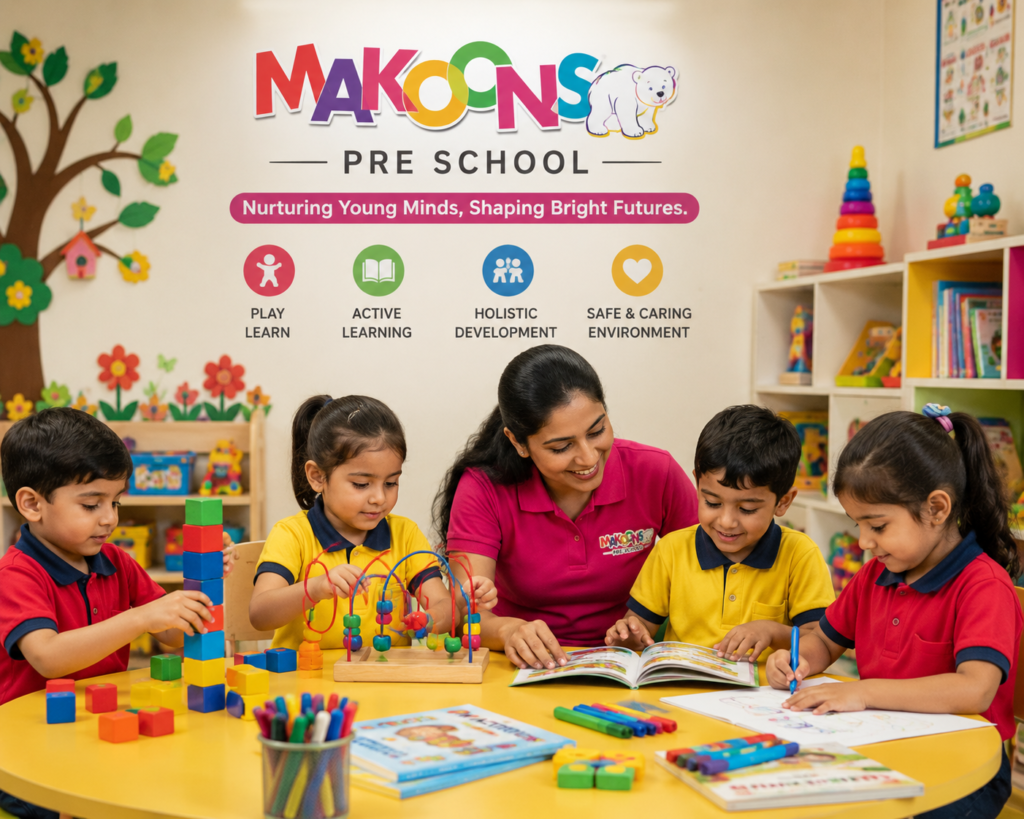
At Makoon Pre School, we believe that children deserve a welcoming environment where they can learn, explore, and grow with confidence.
Our focus is not simply on preparing children for the next class. It is about helping them develop the foundational skills they need for their educational journey.
Final Thoughts
There is no magic age or perfect checklist that can tell you whether your child is completely ready for preschool.
Look at the bigger picture.
Is your child becoming more independent? Are they starting to communicate their needs? Do they show curiosity? Can they participate in simple routines? Are they gradually becoming comfortable around other people?
If you can see some of these signs, your child may be ready to take the next step.
And remember: preschool is not the finish line for readiness. It is where much of that readiness continues to develop.
With patience, encouragement, and the right preschool environment, your child can gradually become more confident, independent, and excited about learning.

