Why Play Based Learning Is So Important for Young Children
When adults think about learning, they often imagine books, worksheets, classrooms and lessons. But young children learn differently. For them, learning happens through curiosity, movement, conversation, exploration and, most importantly, play.
This is where play based learning becomes an important part of early childhood education. Instead of separating learning and play, this approach combines the two so children can develop important skills while doing activities they naturally enjoy.
For parents, understanding the value of play can help them see why a child’s preschool experience should be about much more than simply learning the alphabet or counting numbers.
What Is Play Based Learning?
Play based learning is an approach where children learn concepts and develop skills through purposeful play and activities.
This does not mean children are simply left to play without guidance. Teachers can carefully plan activities that encourage children to think, communicate, experiment and solve problems while still allowing them to enjoy themselves.
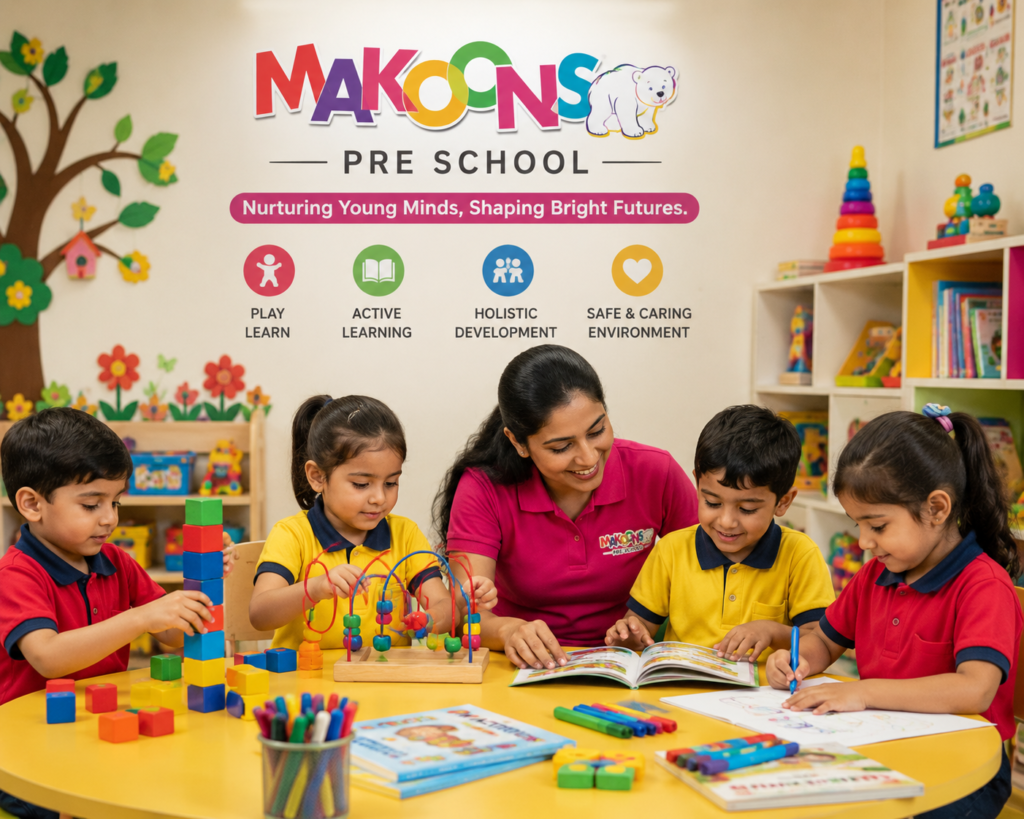
For example, building with blocks may look like a simple game, but it can introduce children to concepts such as shapes, balance, size and problem-solving. A pretend shop can encourage children to communicate, count objects and understand everyday social situations.
The activity may feel like play to the child, but there can be plenty of learning happening underneath.
Why Do Young Children Learn Better Through Play?
Young children have naturally curious minds. They want to touch things, ask questions, try new activities and understand how the world works.
Traditional teaching methods that require children to sit still for long periods may not always suit this stage of development. Play gives children the opportunity to stay active and involved.
When children are interested in an activity, they are more likely to participate, experiment and remember what they discover.
This makes learning feel natural instead of forced.
1. play based learning Encourages Creativity
Creativity is an important skill that children begin developing from an early age.
Drawing, painting, building blocks, clay modelling, music and pretend play give children opportunities to create things using their own ideas.
There does not always have to be one correct answer.
A child might use blocks to build a house, a tower or something completely imaginary. The process encourages them to think independently and express their ideas.
These experiences can help children become more comfortable with trying new things and thinking differently.
2. Play Helps Develop Social Skills
Preschool is often one of the first places where children regularly interact with a larger group of other children.
Group activities and games give children opportunities to practise important social skills.
They learn how to:
Share toys and materials
Take turns
Listen to others
Follow simple rules
Work together
play based learning
Solve small disagreements
These skills may seem simple to adults, but they are important building blocks for a child’s social development.
A child who learns how to cooperate during a group game is also practising skills that can help them in the classroom and later in life.
3. Play Supports Language Development
Children develop language by hearing and using words in meaningful situations.
Storytelling, role play, songs and group conversations provide natural opportunities for children to communicate.
For example, during pretend play, children may create characters and conversations. They might describe what they are doing, ask questions or respond to another child.
This type of interaction can help expand vocabulary and improve communication skills.
Reading stories together can also introduce children to new words, ideas and different ways of expressing themselves.
4. Play Develops Problem-Solving Skills
Children encounter small problems while playing all the time.
A tower might fall down. A puzzle piece might not fit. A child may need to decide how to build something or figure out how to complete an activity.
Instead of immediately giving them the answer, teachers can encourage children to think about possible solutions.
Questions such as “What could we try next?” or “How can we make it stronger?” can encourage children to think independently.
This develops problem-solving skills while allowing children to learn from mistakes.
5. Physical Play Builds Motor Skills
Not all learning needs to happen while sitting at a table it need play based learning.
Running, jumping, dancing, climbing, throwing and other physical activities help children develop coordination and body control.
Fine motor activities are also important. Drawing, colouring, cutting, threading beads and playing with clay can help children strengthen the smaller muscles in their hands and fingers.
These skills can later support activities such as writing, using classroom materials and managing everyday tasks.
The Teacher Still Has an Important Role
A common misunderstanding about play based learning is that teachers simply allow children to play without any educational purpose.
In reality, effective play-based classrooms require thoughtful planning.
Teachers observe children’s interests and use activities to introduce new ideas or encourage specific skills. They can ask questions, provide materials and guide conversations without taking control of the entire activity.
The balance is important.
Children need enough freedom to explore while teachers provide the structure and support that makes the experience meaningful.
What Can Parents Do at Home?
Parents do not need expensive educational toys to encourage learning through play.
Simple activities around the home can create valuable learning opportunities.
Cooking together can introduce children to counting and measurements. Sorting laundry can teach colours and categories. Building with boxes can encourage creativity. Reading a bedtime story can support language development.
Even a short conversation during a walk can become a learning opportunity when parents encourage children to observe their surroundings and ask questions.
The key is not to turn every activity into a formal lesson. Children should still be allowed to enjoy the experience.
Choosing a Preschool That Values Learning Through Play
Parents looking at preschool options should ask how children spend their day.
Are there opportunities for creative activities, storytelling, physical movement, group interaction and exploration? Are children encouraged to ask questions and express their ideas?
A well-balanced early learning environment should give children opportunities to develop academically, socially, physically and emotionally.
Play based learning can make this process more enjoyable because children are actively involved rather than simply being told what to learn.
Giving Children play based learning
Children do not need to rush through childhood to become successful learners they need play based learning . They need opportunities to explore, make mistakes, ask questions and discover things for themselves.
Play gives them that opportunity.
From building blocks and puzzles to stories, art, music and group games, everyday play can support skills that children will continue using as they grow.
For parents, the important thing to remember is that play is not the opposite of learning. For young children, play based learning can be one of the most natural and effective ways to learn.
A preschool environment that understands this can help children develop curiosity, confidence, creativity and a positive attitude towards learning from the very beginning.